

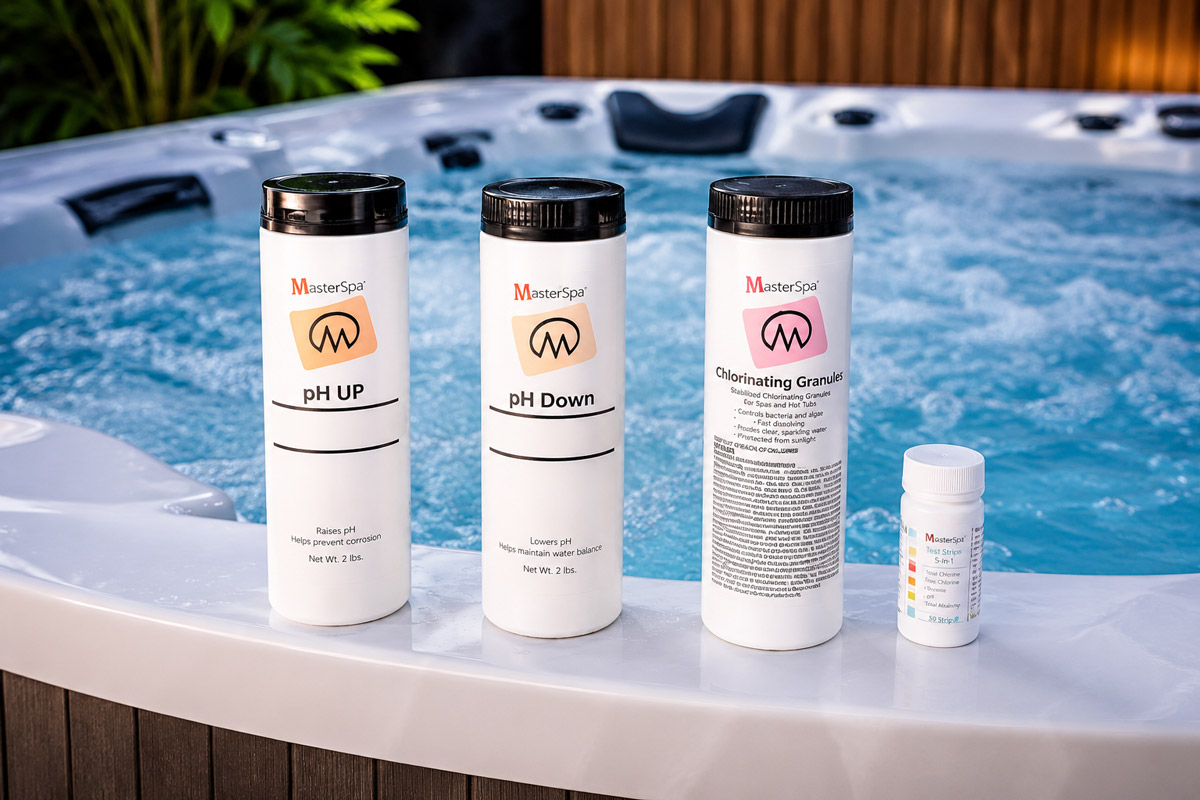
Every week I talk to new hot tub owners who tell me the same thing: they were so excited to get their spa set up, but the chemical routine felt so confusing that they started avoiding it. And a hot tub you avoid is a hot tub that turns into a swamp.
Here in Woodstock, I see this play out a lot. Georgia summers are long and hot, which means you’ll use your spa more, invite more people over, and need to stay on top of your water chemistry more than someone in a cooler climate. The good news is that hot tub chemicals aren’t complicated once you understand the system behind them.
This isn’t a shopping list. It’s a system. Three chemicals, in the right order, for the right reasons. That’s it.
The Short Answer: Hot tub water care comes down to three steps: balance your pH first (target 7.4 to 7.6), add your sanitizer second (chlorine at 1-3 ppm or bromine at 3-5 ppm), then oxidize with shock weekly. Skipping any step breaks the whole system. According to the CDC, proper pH and disinfectant levels are the primary defense against Legionella bacteria in hot tub water.
Why Hot Tub Chemistry Actually Matters
Unbalanced water isn’t just an inconvenience. It’s a health risk.
The CDC specifically identifies hot tubs as environments where Legionella bacteria can thrive if disinfectant and pH levels aren’t maintained. Hot tubs operate in the 77 to 113 degrees Fahrenheit range, which overlaps almost perfectly with the temperature window where Legionella grows fastest. Proper chlorine or bromine levels, combined with correct pH, are the primary barrier between your water and bacterial growth.
pH affects everything else in your tub. When pH drifts too high, above 7.8, your sanitizer becomes far less effective. Chlorine at pH 8.0 is only about 20% as effective as it is at pH 7.4. When pH drops too low, below 7.0, the water becomes corrosive: it etches your shell, wears down your jets, and irritates eyes and skin. Neither direction is safe.
Beyond bacteria, there’s biofilm, the thin slime layer that forms inside pipes and jets when sanitation slips. Once biofilm establishes, it’s stubborn. It takes a deep clean or drain-and-refill to clear it. That’s the outcome you’re avoiding with consistent weekly chemistry.
The 3-Chemical System Every Hot Tub Owner Needs
Think of your water care as three layers, each one building on the last.
Layer 1: pH balance. This is the foundation. Everything else depends on it. Without correct pH, your sanitizer can’t do its job.
Layer 2: Sanitizer. Chlorine or bromine kills bacteria and other pathogens. It only works properly when pH is in range.
Layer 3: Shock (oxidizer). This burns off the organic waste that your sanitizer turns into dead byproduct. Without regular shocking, used-up sanitizer compounds pile up and the water turns murky.
The order matters. If you add sanitizer to water with a pH of 8.2, you’re mostly wasting chemicals. Fix pH first, then sanitize, then oxidize. Skipping that sequence is the most common mistake new owners make.
Getting pH Right: The Foundation of Clean Water
The ideal pH range for a hot tub is 7.4 to 7.6, with 7.5 as the sweet spot. The CDC recommends keeping pH between 7.0 and 7.8 for safety. Most spa professionals target the tighter window of 7.4 to 7.6 because it maximizes sanitizer effectiveness and feels most comfortable on skin.
Testing is straightforward. Test strips work fine for most owners, though a digital tester gives you more precise readings if you want them. Dip, read, adjust.
To raise pH, you add pH Up (sodium carbonate or sodium bicarbonate). To lower it, you add pH Down (sodium bisulfate). Small doses, then retest. Don’t dump the whole bottle.
Here’s where alkalinity comes in. Total alkalinity is the buffer that stabilizes your pH. Without proper alkalinity, pH bounces around every time someone gets in or you add a chemical. The recommended total alkalinity range is 80 to 120 ppm. The rule is to adjust alkalinity first, then pH. Alkalinity is the base; pH is the finish.
Think of alkalinity as the shock absorber in your car. Your pH is the ride. A good shock absorber means a smooth ride. Without it, every bump sends the suspension into chaos.
Chlorine vs. Bromine: Which Sanitizer Should You Use?
Both kill bacteria. The difference is how they behave in hot water.
Chlorine is faster-acting and less expensive. It’s widely available at any hardware store or pool supply shop. The target range for chlorine in a hot tub is 1 to 3 ppm, with 3 ppm being the practical ideal. The downside: chlorine breaks down faster at high temperatures, which means more frequent dosing. When chlorine reacts with organic material like body oils and sweat, it forms chloramines. Chloramines are the compounds responsible for that sharp “pool smell” and eye irritation. They have no sanitizing value.
Bromine is more temperature-stable, making it better suited for hot water above 100 degrees Fahrenheit. When bromine reacts with contaminants, it forms bromamines, which continue to sanitize. The target range is 3 to 5 ppm. Bromine is gentler on skin and eyes for many people, which is why it’s often recommended for those with sensitivities. The tradeoffs: bromine costs roughly twice as much as chlorine, and you can’t protect it from UV breakdown with cyanuric acid the way you can with chlorine.
For outdoor hot tubs in Atlanta that get a lot of direct sun, chlorine with a stabilizer can be a practical choice. For a covered backyard spa in Woodstock used a few nights a week, bromine’s stability and skin-friendliness often win out.
One hard rule: don’t mix them. If you want to switch from one to the other, drain your tub first. Mixing bromine and chlorine creates chemical conflicts that reduce effectiveness and can irritate skin.
Source note: According to the CDC’s guidelines for public hot tubs, free chlorine should be maintained at 3 to 10 ppm or bromine at 4 to 8 ppm continuously. Residential tubs can safely run at the lower end of those ranges.
Shocking Your Hot Tub: What It Is and When to Do It
Shocking isn’t about adding more sanitizer. It’s about burning off the waste that your sanitizer has already processed.
Every time chlorine or bromine kills a contaminant, it creates a spent compound (chloramines or bromamines) that sits in your water. These compounds cloud the water, cause odor, and take up space where active sanitizer should be. Shock oxidizes these compounds and clears them out, so your sanitizer can work efficiently again.
Two types of shock exist, and they’re not interchangeable:
Non-chlorine shock (potassium monopersulfate): This oxidizes spent compounds without adding chlorine to the water. You can get back in the tub after about 20 minutes. This is the go-to choice for weekly maintenance because it doesn’t disrupt your sanitizer balance or require extended wait times.
Chlorine shock: This does double duty, it oxidizes and sanitizes simultaneously. Use it after heavy bather loads, when you refill your tub, or if water has turned cloudy or developed an odor. After chlorine shock, you need to wait until free chlorine levels drop back to 1 to 3 ppm before getting in, which can take up to 24 hours.
How often should you shock? Non-chlorine shock weekly is the baseline. After a party where several people used the tub, shock the same day. After heavy rain in Georgia’s summer storm season, test and shock before the next use. Think of shocking as taking out the trash. You don’t skip a week because nothing looks dirty.
Your Weekly Hot Tub Chemical Routine (Step by Step)
Here’s the practical schedule that keeps things simple.
Every use (or every 2-3 days):
- Test pH and sanitizer levels with test strips or a digital tester.
- Adjust pH up or down to land between 7.4 and 7.6.
- Check sanitizer level. Add chlorine or bromine if below target range.
Weekly:
4. Add a dose of non-chlorine shock after your last soak of the week, or any evening when you’re not planning to get back in.
5. Run jets for 15 minutes with the cover off to help the shock work.
Monthly:
6. Pull and rinse your filter cartridge with a garden hose to remove debris buildup.
7. Check calcium hardness. Target 150 to 250 ppm. Low calcium causes foamy water and soft water that eats at your equipment.
Every 3 to 4 months:
8. Drain, clean, and refill. Even with perfect chemistry, total dissolved solids accumulate over time. Heavy users (daily or near-daily) should drain every 2 to 3 months. Light users (a few times per month) can stretch to 4 to 6 months.
That’s the whole routine. It’s about 10 minutes of actual effort per week once you get the hang of it.
Common Hot Tub Water Problems and How to Fix Them
Foamy water: The most common cause is surfactants from lotions, shampoo, conditioner, and detergent residue on swimsuits. Even a tiny bit of laundry detergent left in a suit can foam a 400-gallon tub. The fix: test and balance your water, shock with non-chlorine shock, and check your calcium hardness. If calcium hardness is below 100 ppm, add a calcium increaser to bring it into the 150 to 250 ppm target range. Low calcium is an overlooked foam culprit. Ask your guests to rinse off before getting in.
Cloudy water: Usually points to low sanitizer levels or high bather load. Test and raise your chlorine or bromine to the correct range, then shock. If cloudiness persists after 24 hours, clean your filter. A dirty filter can’t circulate water properly and lets suspended particles stay in solution.
Green or discolored water: Green usually means algae from low sanitizer. Metallic discoloration (blue-green or brown) points to minerals in your fill water, particularly copper or iron. The solution for algae is chlorine shock followed by filter cleaning. For metals, a metal sequestrant added at fill time prevents the problem from starting.
Skin or eye irritation: This almost always traces to a pH problem or a sanitizer imbalance. Test both immediately. Chloramine buildup from spent chlorine is another frequent cause. Shocking and allowing the water to circulate with the cover off for an hour usually resolves it. If it keeps happening, check your total alkalinity, because unstable alkalinity leads to pH swings that cause ongoing irritation.
Salt Water Systems: Are They Worth It?
Salt water hot tubs generate chlorine through electrolysis, converting salt to chlorine automatically. They’re popular with owners who want a lower-maintenance chemical routine.
The FROG @ease system takes a different approach. It uses a mineral cartridge combined with SmartChlor technology, a time-released chlorine system that self-adjusts based on demand. According to FROG, the system maintains a steady low chlorine level using about 75% less chlorine than traditional sanitizing methods. Mineral cartridges last up to four months; SmartChlor cartridges last up to four weeks. Shocking is reduced to once per month.
We carry the FROG @ease system at our Woodstock showroom. It’s a strong option for owners who want effective sanitation without the complexity of daily testing and manual dosing.
Is it worth the higher upfront cost? For a lot of Atlanta-area families using their spa three or four times per week during the long Georgia summer, yes. The time savings compound quickly when you’re using the tub six months out of the year. For occasional users, traditional chlorine or bromine is perfectly fine and considerably cheaper.
One thing to note: salt or mineral systems don’t eliminate the need for pH monitoring. You still need to test and adjust pH. The chemical reduction is real, but “low maintenance” doesn’t mean “zero maintenance.”
Hot Tub Water Care at Our Woodstock Showroom
We’re at 9040 Highway 92, Woodstock, GA 30189. Call us at (678) 726-8777.
Every hot tub we carry, including DreamMaker, Dynasty Spas, and Generation Spas models, is designed with practical water care in mind. Good insulation keeps water temperature stable, which reduces the chemistry swings you see in cheaper builds. Efficient filtration does more of the cleaning work so your chemicals go further.
Georgia’s warm climate is genuinely great for hot tub ownership. You get more months of comfortable outdoor use than almost anywhere in the country. Atlanta summers running from May through September mean long stretches of regular use, which is exactly when consistent chemistry pays off. More bathers, more heat exposure, faster chemistry shifts. A five-minute test twice a week keeps you ahead of it.
When you buy a spa from us, we walk you through your specific tub’s water care requirements before you leave the showroom. We also carry a full line of chemicals: pH adjusters, chlorine, bromine, non-chlorine shock, calcium hardness increaser, metal sequestrant, and the FROG @ease floating system. If you’re ever uncertain about your water, bring a sample to the store. We’ll test it on the spot and tell you exactly what to add.
Water chemistry is the thing most hot tub owners wish someone had explained clearly at the start. That’s what we’re here for.
Frequently Asked Questions
How often should I test my hot tub water?
Test at least twice per week under normal use. During heavy use periods, like multiple soaks per day or several guests using the tub, test before and after each use. The CDC recommends testing public hot tubs at least twice daily. For a residential spa, twice per week covers most situations.
Can I use pool chemicals in a hot tub?
Some overlap exists, but it’s not a simple swap. Pool chlorine is often in different concentrations and may contain additives that cloud hot tub water. Pool pH products work similarly. That said, hot tubs are far smaller than pools, typically 300 to 500 gallons versus 15,000 or more for a pool, so dosing is completely different. Always use products labeled for spas and always check concentration levels before adding anything. Using pool shock at pool doses in a hot tub can spike your chlorine to harmful levels in minutes.
What should I do if my hot tub water is cloudy?
Start by testing. Cloudy water almost always traces to one of three causes: low sanitizer, pH out of range, or a dirty filter. Test pH and sanitizer first, correct them if needed, then apply non-chlorine shock. Clean your filter cartridge. If cloudy water persists after 24 to 48 hours of correct chemistry, it’s time to drain and refill.
How long after adding chemicals can I get in?
For non-chlorine shock: wait 20 minutes. For pH adjusters and standard sanitizer additions: wait at least 30 minutes and retest to confirm levels are in range. For chlorine shock: wait until free chlorine drops back to 1 to 3 ppm, which can take up to 24 hours. When in doubt, let the water circulate with jets running and test before getting in.
How often should I drain and refill my hot tub?
For moderate use (a few times per week), drain and refill every 3 to 4 months. Heavy users who soak daily or near-daily should drain every 2 to 3 months. Light users, once or twice per month, can stretch to 4 to 6 months. During Georgia’s hot summers when usage picks up, lean toward the more frequent end of the range. No amount of chemicals can substitute for fresh water once dissolved solids accumulate past a certain point.