

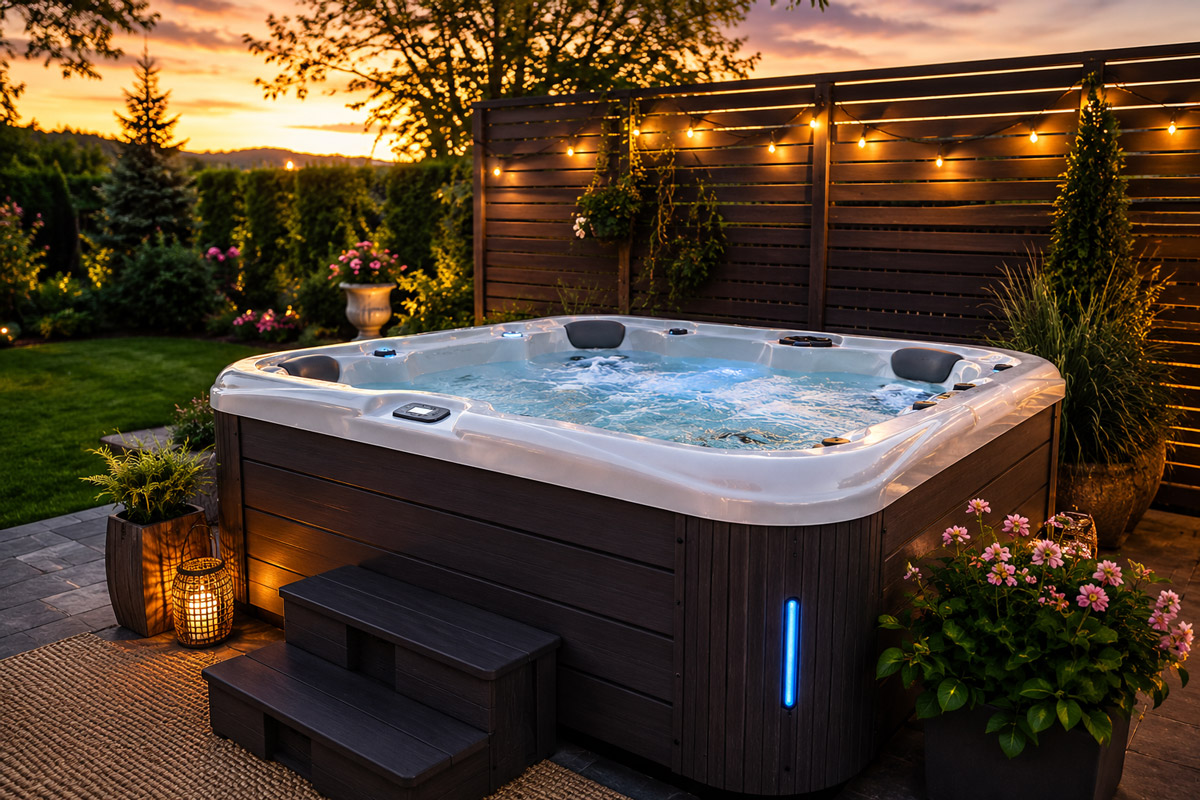
Choose a plug-and-play hot tub if you want simpler setup, smaller seating, and an easy path into spa ownership. Choose a 220V or 240V hot tub if you want stronger performance for frequent family use, larger seating, colder-weather soaking, or more feature-heavy models. The right answer depends on your backyard, routine, and the exact model sheet, not just the voltage label.
Important note: Always confirm electrical requirements for the exact hot tub model. Use a licensed electrician for any dedicated circuit, conversion, disconnect, or code-related work.
Main Difference
Plug-and-play hot tubs are designed to be easier to place and power when the model supports that setup. They are popular with buyers who want a portable spa experience without starting with a bigger electrical project.
220V or 240V hot tubs usually move you into the stronger-performance lane. These models are often chosen for bigger seating, more powerful systems, and households that expect regular use by several people.
Here is the plain-English version:
| Question | Plug-and-play hot tub | 220V or 240V hot tub |
|---|---|---|
| Best fit | Simple ownership, smaller groups, easier setup | Larger families, heavier use, more performance |
| Electrical planning | Still must match model requirements | Dedicated electrical planning required |
| Performance | Good for casual soaking when matched correctly | Usually better for heat recovery and feature load |
| Shopping risk | Assuming any outlet will work | Forgetting electrical work in the budget |
| Best next step | Confirm exact outlet and model needs | Get electrician input before delivery |
Key answer: plug-and-play is about simpler entry. 220V or 240V is about performance headroom. Neither is automatically better for every buyer.
What Plug-and-Play Hot Tubs Do Well
Plug-and-play hot tubs are appealing because they lower the intimidation factor. You can look at a smaller portable spa and imagine it on a patio without turning the first conversation into a construction project.
They can be a good fit when:
- You are a first-time hot tub buyer
- You want a smaller tub for 2 to 4 regular users
- You care more about casual soaking than max jet power
- You have a simple patio or ground-level space
- You may move in a few years
- You want to keep the buying process straightforward
That does not mean plug-and-play is “cheap” or second-rate. It means the model is built for a different ownership path. Dreammaker has portable spa options that are often part of this conversation, and several model cards show convertible electrical language. The details matter, so do not rely on a category label alone.
The common mistake is assuming plug-and-play means “any outdoor outlet is fine.” It does not. The outlet, circuit, GFCI protection, location, extension cord rules, and local code still matter.
What 220V Hot Tubs Usually Do Better
If you picture the hot tub as a regular part of family life, 220V or 240V models deserve serious attention. They are often the better fit for larger shells, more seats, more jets, heavier pump demands, and buyers who want consistent performance during longer sessions.
At Basements & Backyards, the Dreammaker Crossover 740S product page lists a 240 volt, 50 amp control system and a 4 kW heater requiring 240, 50 amp wiring. That is model-specific information, not a rule for every spa. It is exactly why you should compare current model sheets in the Woodstock showroom before you plan electrical work.
220V or 240V may make sense when:
- You expect 4 or more people to use the spa often
- You want a bigger all-seat model
- You want a lounge plus strong jet performance
- You plan to use the tub throughout cooler months
- You do not want the system working at the edge of its capability
- You are already preparing a dedicated backyard spa area
Key answer: if the hot tub is going to be a true backyard hangout, not an occasional soak, the electrical setup should match that level of use.
Electrical Planning for a Metro Atlanta Backyard
Electrical planning is not the place to wing it. Water, wet hands, damp grass, and outdoor circuits are a serious safety mix. The U.S. Consumer Product Safety Commission warns that wet surfaces increase electrical shock risk around pools, spas, and hot tubs. Use that as the practical reminder: have the right professional handle the power side.
For Metro Atlanta homes, plan panel distance, spa location, disconnect placement if required, dedicated wiring needs, and safe access before delivery.
Do not ask the delivery crew to solve electrical questions on delivery day. The better sequence is showroom model selection, model sheet review, electrician quote, site prep, delivery planning, then final placement.
Performance, Heating, Jets, and Family Use
Voltage is not the only performance factor. Shell size, water volume, insulation, heater size, pump setup, jet count, cover quality, wind exposure, and how often the tub is opened all affect your ownership experience.
Still, power setup matters because it supports what the spa can do at one time. A smaller plug-and-play model may be perfect for quiet weeknight soaking. A larger 220V or 240V model may make more sense when several people are using jets, the cover is open longer, and you want the tub ready again the next day.
Think about your real routine. Two adults taking short evening soaks may be fine with a simpler model. A family with teens, weekend guests, or year-round use should compare 220V or 240V options seriously.
Key answer: do not buy voltage. Buy the soaking experience you want, then choose the electrical path that supports that model safely.
How To Choose Based on Your Daily Routine
Start with use, not wiring.
Ask yourself:
- Who will use the hot tub most often?
- How many people will sit in it at the same time?
- Is this for quiet soaking, family time, or entertaining?
- Do you want a lounger?
- Will you use it in colder months?
- Do you want strong jet sessions or gentle comfort?
- Is your patio already prepared?
- Are you willing to schedule electrical work before delivery?
Then build a short list:
| Buyer type | Better starting point | Why |
|---|---|---|
| First-time owner wanting simple care | Plug-and-play or convertible portable spa | Lower setup friction |
| Couple with small patio | Smaller plug-and-play or compact 240V model | Fits space and routine |
| Family of 4 or more | 220V or 240V model | More performance headroom |
| Frequent host | Larger 220V or 240V model | Better match for longer sessions |
| Buyer unsure about future home plans | Portable or convertible model | More flexibility |
The best answer may be a convertible model, but only if the current model sheet supports it and the electrical plan is clear.
What To Ask in the Showroom
When you visit the Woodstock showroom, bring backyard photos and a rough measurement of the space. The team can help you compare model cards and avoid a mismatch between the spa you like and the electrical work your yard needs.
Ask these questions:
- Is this exact model plug-and-play, 220V, 240V, or convertible?
- What does the current model sheet say?
- Does conversion require a licensed electrician?
- What performance changes between power setups?
- What size household is this model best for?
- How much access space should I leave around the spa?
- What should my electrician review before delivery?
Basements & Backyards carries Dreammaker, Generation Spas, and Dynasty Spas, so you can compare different model families without shopping from a single brand’s brochure.
FAQs
Is plug-and-play better than 220V?
Plug-and-play is better for some buyers because setup can be simpler. 220V or 240V is better for many larger or heavier-use spas because it usually supports stronger performance. The best choice depends on the exact model and how you will use it.
Can I plug a hot tub into any outdoor outlet?
No. Even plug-and-play models have specific electrical requirements. Confirm the model sheet, outlet type, circuit, GFCI protection, and local code needs with a licensed electrician.
Are all Dreammaker spas plug-and-play?
No. Dreammaker has different portable spa models, and some model cards include convertible or dedicated electrical requirements. Check the current product page or showroom model card before making plans.
Does Basements & Backyards do electrical work?
Do not assume electrical work is included. Ask the showroom team what the spa requires, then use a licensed electrician for wiring, conversion, disconnects, and code questions.
Which setup is best for Atlanta winters?
Metro Atlanta winters are mild compared with northern states, but cool nights still matter. If you plan frequent winter soaking, compare heat recovery and electrical requirements for the exact models you are considering.