

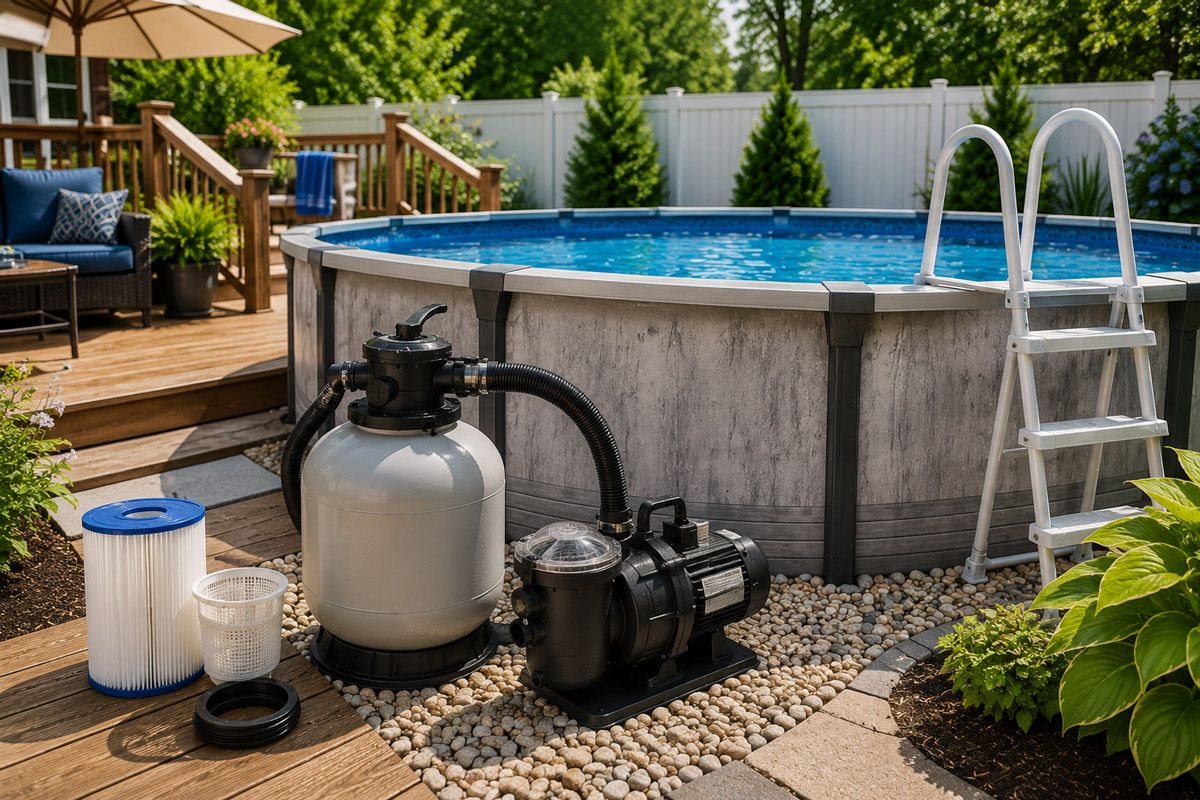
A pool pump and filter work as a team, but they do different jobs. The pump moves water through the plumbing, while the filter captures debris carried by that flow. If either one is poorly matched, dirty, blocked, or incorrectly installed, clear water becomes much harder to maintain.
For an above-ground pool, choose equipment around the pool volume, plumbing, existing connections, filter design, and manufacturer requirements. Horsepower or filter size alone does not tell you whether a replacement will work.
Why Circulation and Filtration Belong Together
The pump pulls water from the pool and pushes it through the filter before returning it. That circulation distributes sanitizer and carries suspended debris toward the equipment. The filter catches particles, but it cannot clean water that is not moving through it.
A larger pump is not automatically an upgrade. Too much flow can be a poor match for the filter or plumbing, while too little may not support the system as intended. The pump, filter, hoses, valves, fittings, and electrical supply need to function as one setup.
When buying a pool package, ask for the model of both the pump and filter. When replacing equipment, bring photos of the entire pad and close-ups of every label and connection. That context helps prevent buying one correct-looking part that does not fit the rest of the system.
Sand Filters and Cartridge Filters
Sand and cartridge filters can both serve above-ground pools. The ownership experience differs mainly in how the filter media captures debris and how the system is cleaned.
A sand filter directs water through a bed of filter sand. As pressure changes and performance indicates cleaning is needed, the owner follows the system instructions for backwashing and rinsing. That process uses pool water and requires a suitable discharge path.
A cartridge filter sends water through a pleated element that is removed and cleaned. It does not use the same backwashing routine, but the cartridge needs hands-on rinsing, periodic deeper care, inspection, and eventual replacement.
Neither is universally easier. Sand may appeal to someone who prefers valve-based cleaning and has a practical backwash route. Cartridge filtration may suit an owner comfortable removing and cleaning an element and who wants to avoid routine backwash discharge. Compare the actual equipment and your property rather than relying on a one-line ranking.
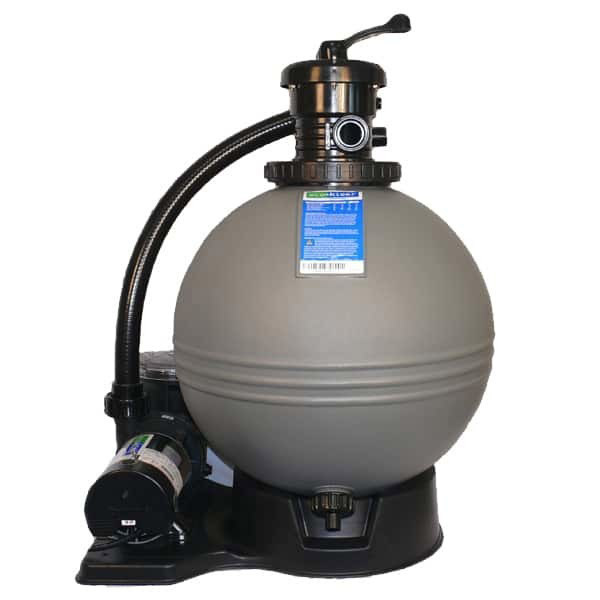
Waterway 22-Inch Sand Filter System
The Waterway 22-inch Sand Filter System product page describes an above-ground 22-inch sand filtration system paired with a one-speed Waterway Hi-Flo pump.
The page calls it an in-ground-style filtration system with an above-ground Hi-Flo pump. Before buying, confirm the required filter media, pump specifications, valve and hose connections, installation footprint, flow requirements, and warranty.
A sand system also needs a backwash plan. Decide where discharged water can go without damaging landscaping, flowing toward a neighbor, or violating local requirements. The equipment location should remain accessible enough to operate the valve, inspect connections, and service the pump.
Waterway ProClean 125SF Cartridge System
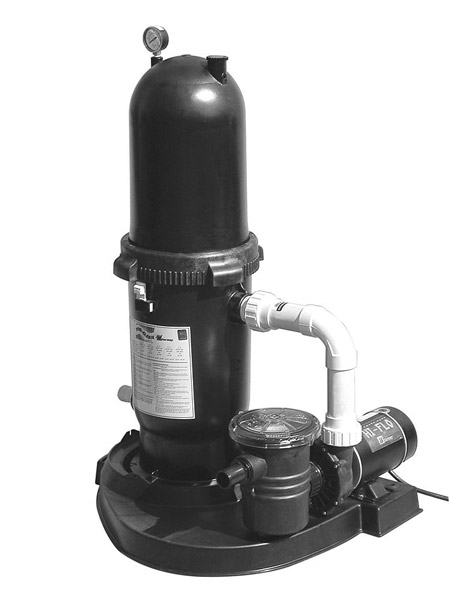
The Waterway ProClean 125SF Cartridge System page describes a 125-square-foot above-ground cartridge filtration system with a 1.0 HP two-speed Hi-Flo pump and lists MPN 56316.
A two-speed pump can provide different operating choices when used as designed, but the correct speed and schedule depend on the pool, equipment, and manufacturer instructions. Do not assume a generic run-time recommendation applies to every setup.
Ask how to release pressure safely, remove and clean the cartridge, identify the replacement element, and recognize when cleaning is needed. Keep enough room around the filter to open the housing and lift the cartridge out without fighting a fence or deck.
BaquaPure 1.0 HP Replacement Pump
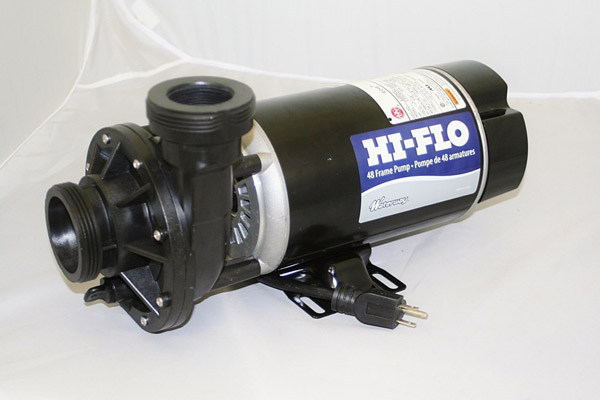
The BaquaPure 1.0 HP Two-Speed Replacement Pump product page identifies it as a Waterway Hi-Flo pump with a strainer pot, one full-rated horsepower, two speeds, a rotatable wet end, 115-volt power, and a three-foot NEMA cord. It also lists replacement references 111826 and 052200.
Those details are useful when replacing a known compatible pump. They do not make the pump universal. Match voltage, speed, horsepower, wet-end orientation, connection size, flow, cord and plug, and filter compatibility. Confirm the exact replacement reference from the old equipment rather than buying only because “1 HP” matches.
Electrical equipment near a pool must be installed and connected according to product instructions and applicable requirements. If the replacement is not a direct, documented match, involve the showroom and a qualified professional before making changes.
Read the Equipment Labels Before Shopping
A faded label can still contain the most important information in the equipment area. Photograph it in good light and record the manufacturer, model, part number, voltage, horsepower, speed, and any service-factor or flow information shown.
Also photograph hose or pipe size, unions, valves, strainer basket, filter label, and the distance between components. If possible, bring the old part. An equipment overview tells the showroom how the pieces relate, while close-ups help identify the specific replacement.
Avoid changing several components at once unless the system is being intentionally redesigned. Replacing a pump with a different flow can affect the filter and plumbing, and changing the filter may require different connections or working clearance.
Basic Care for the Pump
The pump basket catches larger debris before it reaches the impeller. Check and clean it according to the equipment instructions, especially after storms or heavy leaf fall. Turn equipment off and release pressure using the approved procedure before opening any part of the system.
Keep the equipment area free of weeds, mulch, standing water, and stored items that block airflow or access. Listen for changes in sound and look for leaks, air in the system, reduced return flow, or difficulty priming. A symptom may have several causes, so avoid diagnosing it from one sign alone.
If a breaker trips, a cord or connection is damaged, or water reaches electrical components unexpectedly, stop using the equipment and get qualified help.
Basic Care for the Filter
For a sand filter, follow the pressure guidance and valve sequence in the manual. Backwashing too often can waste water, while waiting too long can reduce effective flow. Use the specified filter media and quantity.
For a cartridge system, shut down and depressurize it correctly before opening the housing. Rinse the element using the approved method and inspect the pleats, bands, end caps, and seals. Household cleaners or aggressive pressure can damage a cartridge.
A filter works best when larger leaves and yard debris are removed before they overload the system. Skimming and brushing support filtration rather than replacing it. The live above-ground pool maintenance guide connects equipment care with the rest of the weekly routine.
Georgia Storms and Pollen
Spring pollen and summer storms can send a sudden load of fine and coarse debris into the pool. Remove branches and leaves before expecting the filter to handle everything. Check baskets and equipment after major weather and watch for changes in pressure or flow.
Cloudy water is not always a filter-sizing problem. Water balance, sanitizer, circulation, debris, heavy use, and algae can all contribute. The pool algae treatment guide explains how algae problems differ from ordinary equipment upkeep.
Compare Equipment in Woodstock
Bring labels, photos, measurements, and the old part to Basements & Backyards at 9040 Highway 92, Suite 120 in Woodstock. The team can help you compare current Waterway systems and replacement equipment against the setup you already have.
Good circulation should make pool ownership feel routine, not mysterious. Match the equipment carefully, learn its cleaning process, and give the pad enough attention to catch small changes before a hot Georgia weekend.
FAQs
What is the difference between a pump and filter?
The pump moves water through the system. The filter captures debris carried by that water. They must be matched to each other and the pool.
Is sand or cartridge filtration better?
Both can work well. Sand uses a backwash routine, while a cartridge is removed and cleaned. Choose according to the pool, equipment match, property, and maintenance preference.
Can I replace a pool pump with any pump of the same horsepower?
No. Voltage, speed, flow, connections, wet-end orientation, electrical configuration, and filter compatibility also matter.
How do storms affect pool equipment?
Storms add leaves, pollen, dirt, and water. Remove large debris, inspect baskets, and watch pressure and flow rather than expecting the filter to handle everything untouched.
What should I bring when shopping for a replacement?
Bring the old part when possible, plus clear photos of labels, plumbing, cords, connections, valves, and the complete equipment area.