

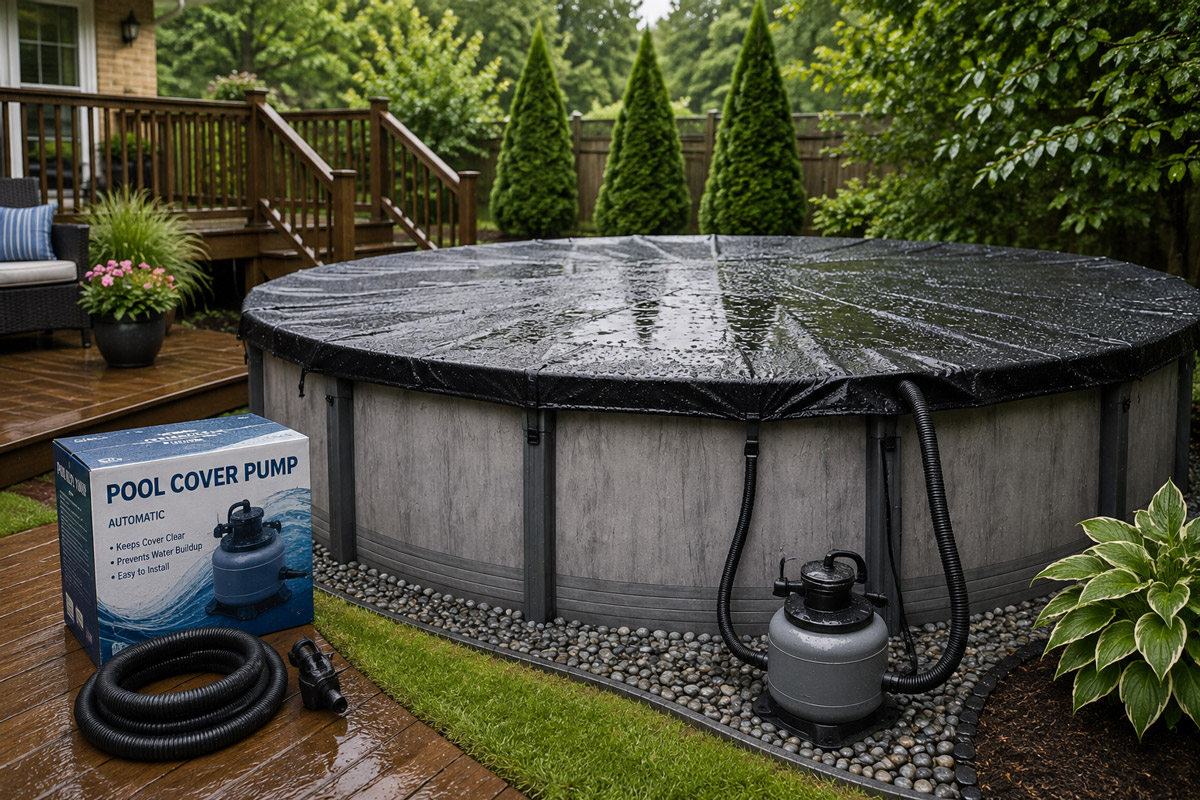
An above-ground pool cover can keep leaves, pollen, and other debris out of the water, but rain does not disappear when it lands on top. In Georgia, where a storm can add a surprising amount of water in one afternoon, a cover pump can make off-season care much easier.
The right choice depends on the cover, pool size, yard, and how quickly water tends to collect. Basements & Backyards currently carries three pool cover pump options rated at 300, 350, and up to 1,745 gallons per hour.
What a Standard Pool Cover Actually Does
A standard cover helps keep windblown leaves, pine needles, pollen, insects, and yard debris from settling directly into the pool. That can reduce the cleanup waiting for you when the pool reopens and helps protect the water from becoming a catch-all during the off-season.
The cover still needs care. Leaves can hold moisture and break down on the surface. Rainwater adds weight and can pull the cover lower. If water and debris sit long enough, removing the cover cleanly becomes much harder.
A cover also does not automatically qualify as a safety cover. Unless the product is specifically designed, tested, and labeled for that purpose, do not treat it as a barrier that can support a person or prevent access. Pool safety requires layers that may include a compliant barrier, secured gate, alarms, controlled entry equipment, and active adult supervision.
Why Rainwater on the Cover Matters
Water is heavy. One gallon weighs a little more than eight pounds, so even a shallow-looking puddle can place a substantial load on the cover. The water can also create a low point that attracts more rain and debris.
Removing that water protects the cover from carrying unnecessary weight and makes leaf cleanup more manageable. It also reduces the chance that dirty cover water spills into the pool when you begin opening.
The goal is not necessarily to keep the cover perfectly dry every minute. It is to prevent water from accumulating beyond what the cover and installation are intended to handle. Follow the cover manufacturer’s instructions for support, fastening, drainage, and maintenance.
What GPH Tells You
GPH means gallons per hour. It describes the pump’s maximum flow under stated conditions, not a promise that every real setup will drain at exactly that speed. Hose length, lift, restrictions, debris, and the depth of water can affect actual performance.
A higher rating can remove a larger volume faster, but speed is not the only consideration. Automatic operation, minimum water depth, cord length, hose connection, portability, and cleaning access can matter just as much.
A small cover with occasional shallow water may not need the highest-capacity model. A larger cover in an exposed yard may benefit from faster or automatic pumping. Compare the way water actually collects at your home rather than buying by the largest number alone.
The 300 GPH Cover Pump
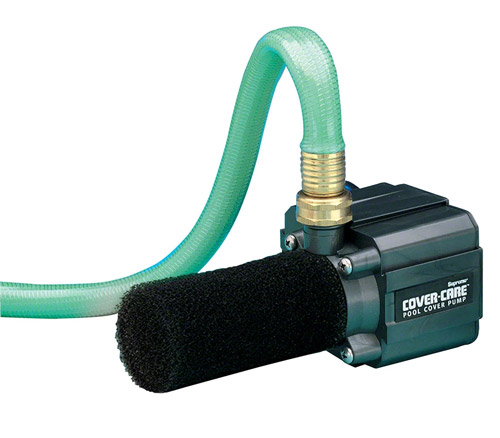
The Cover Care 300 GPH Pump product page describes a magnetic-drive motor, submersible design, included fitting for a standard 3/4-inch garden hose, and pumping down to approximately 1/8 inch of water.
This is a manually connected option: the page instructs owners to plug it in when it is time to drain the cover. That can suit someone who checks the pool regularly and wants a basic pump for manageable water accumulation.
The page also describes the pump as clog resistant and currently lists a one-year limited warranty. Confirm current warranty terms and follow the product instructions for placement, electrical use, hose routing, and supervision while operating.
The 350 GPH Cover Pump
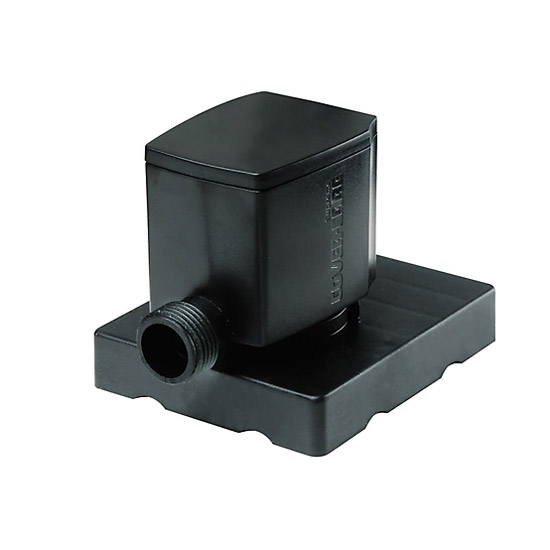
The Cover Care 350 GPH Pump has published features are similar to the 300 GPH model: magnetic drive, submersible operation, connection to a standard 3/4-inch garden hose, and pumping down to approximately 1/8 inch.
The difference in rated flow is modest, so the warranty and current product details may influence the choice as much as 50 additional gallons per hour. The page currently lists a five-year limited warranty, but buyers should verify the actual written terms before relying on that duration.
Both smaller pumps make the owner part of the process. You decide when water needs removal, place the pump correctly, connect the hose, and monitor the discharge path.
The 1,745 GPH Automatic Pump
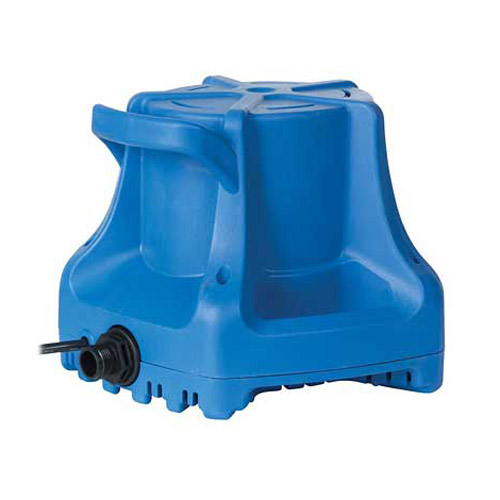
The Super Pro 1,745 GPH Cover Pump is a different type of option, described as an automatic submersible pump with an integrated float switch that activates in about two inches of water.
Its page lists a 25-foot power cord, built-in handle, removable intake screen, included standard garden-hose fitting, and UL approval. The higher rated flow and automatic activation can be helpful where substantial rainwater collects or where the owner wants the pump to respond after water reaches its activation depth.
Automatic does not mean ignore it for the season. The intake still needs to stay clear, the hose needs a safe discharge route, and the pump and electrical connection must be used according to the instructions. Check the cover after storms and confirm that the equipment is operating as expected.
Plan the Discharge Path
A pump solves only half the problem. The water needs somewhere appropriate to go.
Route the hose so it does not send water back toward the pool, foundation, neighboring property, septic area, or a place where it will erode soil. Avoid creating an icy or slippery walking path during cold weather. Local stormwater or discharge rules may also apply.
Long hoses and elevation changes can reduce flow, so the most convenient discharge point may affect pump performance. Keep the hose free of sharp bends and inspect it for damage before use.
Electricity and pooled water also require care. Use the pump only with the connection and protection specified by the manufacturer. Do not use damaged cords, makeshift extensions, or an outlet arrangement that is not suitable for the application. When in doubt, ask a qualified electrician.
Georgia Leaves, Pollen, and Storms
Metro Atlanta weather gives covers different jobs throughout the year. Spring pollen can coat the surface and wash toward low spots. Summer thunderstorms can add water quickly. Fall leaves collect moisture and may block a pump intake if they are not removed.
Clear large debris before it breaks down, but do not walk or lean onto the cover to reach the center. Use tools and methods recommended by the cover manufacturer. After a storm, inspect the cover, fasteners, pump, hose, and surrounding drainage.
During longer dry periods, check that the cover remains positioned correctly. A maintenance routine built around local weather is more useful than putting the cover on once and forgetting about it until spring.
Choosing the Right Pump
Start by estimating the size and depth of the water that normally accumulates and how often you can check the cover. If you are comfortable operating the pump when needed, one of the smaller manual models may be enough. If the cover collects larger volumes or you value automatic activation, the 1,745 GPH model may be the better direction.
Confirm minimum operating depth, whether the pump can run dry, hose requirements, electrical instructions, warranty, and storage procedure. A model that fits your routine is more useful than one whose features you never use correctly.
Bring a photo of the pool, cover, low spots, and nearby discharge options to Basements & Backyards in Woodstock. The team can help you compare the current pump options and think through the practical details before the next round of Georgia rain.
FAQs
Does every above-ground pool cover need a pump?
Not every cover or installation is the same. If rainwater accumulates on top rather than draining as designed, a compatible cover pump can make maintenance easier.
What does GPH mean?
GPH means gallons per hour. It is a rated flow figure; actual drainage can change with hose length, lift, debris, restrictions, and operating conditions.
Is a standard pool cover a safety cover?
Not unless it is specifically designed, tested, and labeled as one. A standard debris or winter cover should not be treated as a complete safety barrier.
Is the 1,745 GPH pump automatic?
Its current product page describes an integrated float switch that activates at about two inches of water. Follow the instructions and continue checking the pump and cover.
When should Georgia owners check the cover?
Check it routinely and after heavy rain, wind, leaf fall, or pollen buildup. Remove debris and manage accumulated water before either becomes difficult to handle.