

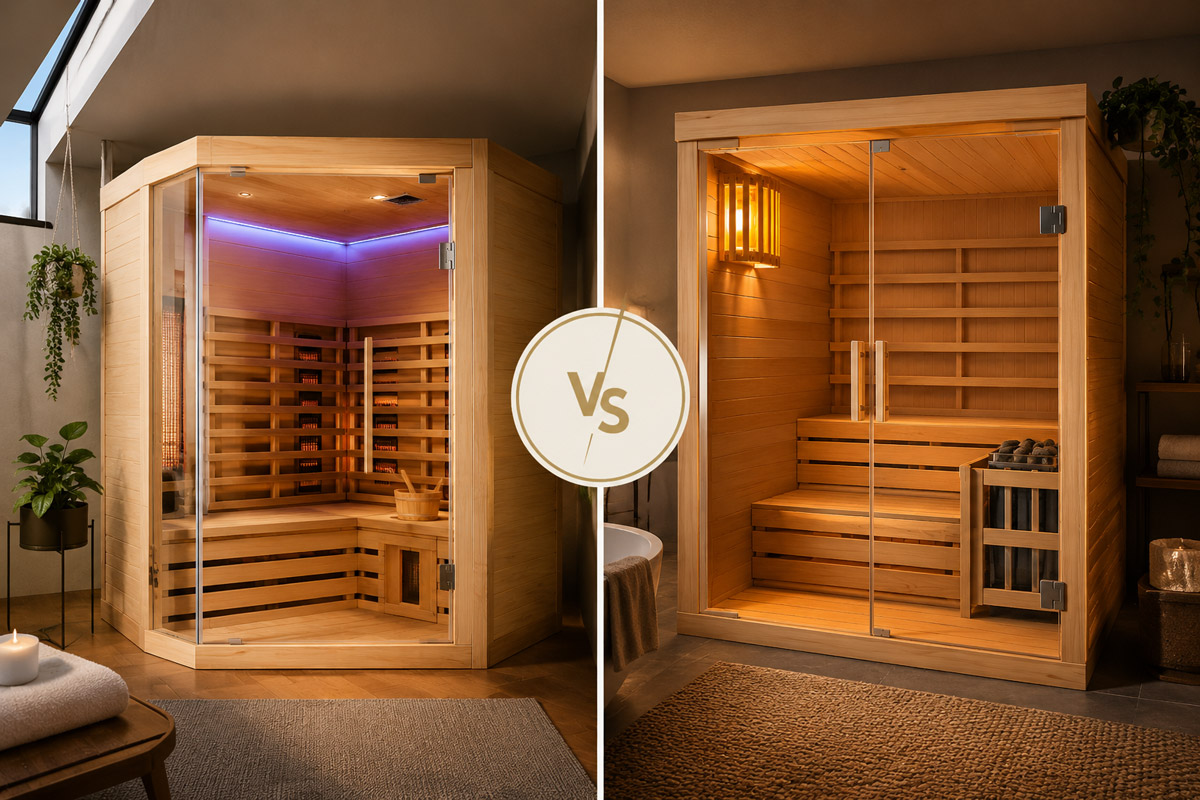
Every week at our Woodstock showroom, someone walks in asking the same question: infrared sauna or traditional sauna? It’s one of the most common decisions we help Atlanta-area homeowners work through. And the honest answer isn’t a simple “this one is better.” It depends on what you’re trying to get out of a sauna, what your home can actually support, and how much you want to spend on installation and operating costs.
Here’s what I’ve noticed after years of these conversations: most people overthink the health debate and underthink the installation question. That’s backwards. The health benefits of both types are real and well-documented. But your home’s electrical panel doesn’t care about your wellness goals.
By the time you finish reading this, you’ll know exactly which sauna makes sense for your specific situation.
The Short Answer: For most Metro Atlanta homeowners, infrared is the practical choice. It plugs into a standard 110V outlet, heats up in 15-20 minutes, and costs $5-$15/month to operate vs. $15-$30/month for traditional. If you want the authentic high-heat experience and have the right space, traditional is worth the investment.
How They Work: The Core Difference Between Infrared and Traditional Heat
The fundamental difference comes down to what each type actually heats.
Traditional saunas heat the air around you. An electric heater warms a pile of rocks to extreme temperatures, and those rocks heat the ambient air inside the sauna room to 170-195°F. When you pour water over the rocks, you get a burst of steam that spikes humidity and creates the intense, enveloping heat that Finnish sauna culture is built around. Your body heats up because the air around you is extremely hot.
Infrared saunas work differently. They emit radiant heat that penetrates directly into your body tissue, much like sunlight warms your skin on a cool day. The air temperature inside stays between 120-150°F, but your core temperature rises because your body is absorbing the infrared wavelengths directly. You sweat heavily even though the room itself feels more tolerable.
Why does this distinction matter? Two reasons. First, the experience feels completely different. Second, and more practically for Georgia homeowners, the installation requirements are completely different. Traditional saunas need to sustain extreme air temperatures, which means heavy-duty electrical work, specific materials that won’t warp or degrade at 195°F, and often waterproofing and drainage. Infrared saunas just need a standard outlet.
Temperature and Experience: What Does Each Feel Like?
Traditional saunas run hot. The air temperature sits between 170-195°F, and when you add humidity by pouring water over the rocks (called löyly in Finnish), the heat feels even more intense. Your body responds to the extreme ambient temperature by sweating aggressively to cool itself down.
Infrared saunas run at 120-150°F. The air feels warm but not overwhelming. Most people find it much easier to sit in for longer sessions, and people who struggle to tolerate traditional sauna heat often do fine with infrared.
So which experience is “better”? That depends on what you’re after.
If you grew up with traditional saunas, or you’re chasing that intense Finnish-style heat and the ritualistic aspect of managing steam, infrared won’t scratch that itch. The two experiences feel nothing alike. Traditional sauna heat is immersive and borderline harsh in a way some people genuinely love. Infrared is gentler, more like sitting under a heat lamp than standing in a blast furnace.
For people with heat sensitivity, cardiovascular concerns, or conditions that make extreme temperatures problematic, infrared’s lower ambient temp is often a better fit. You still sweat. You still get the therapeutic benefits. You just don’t feel like you’re being cooked alive.
Health Benefits: Where They Overlap and Where They Differ
Both sauna types raise your core temperature, increase heart rate, and trigger deep sweating. Those shared mechanisms drive most of the health benefits tied to regular sauna use.
What traditional saunas have going for them: decades of Finnish population research. A long-running study on more than 2,000 Finnish men found that higher-frequency sauna use, with sessions at temperatures of at least 174°F, correlated with significantly reduced risk of cardiovascular-related mortality, all-cause mortality, and incidence of Alzheimer’s disease. That’s a serious body of evidence built over many years of observation.
What infrared research shows: the evidence is growing and promising, even if the research base is smaller. A review of infrared sauna therapy found moderate evidence for blood pressure normalization in people with hypertension, with systolic blood pressure dropping from around 107 mmHg to 97 mmHg after regular sessions. Research has also shown improvements in chronic pain conditions including fibromyalgia and rheumatoid arthritis. A clinical study found cardiovascular improvements and reduced waist circumference in people with type 2 diabetes after consistent infrared sauna use.
On detox specifically: both types make you sweat, and sweating does eliminate some toxins. The claim that infrared’s deep tissue penetration releases toxins stored in fat cells more effectively than traditional sweating is theoretically interesting but not yet fully supported by research. Don’t choose infrared specifically because someone told you it detoxes better. Choose it based on the practical factors in your situation.
The honest summary: traditional sauna has a longer research track record, particularly for cardiovascular outcomes. Infrared has strong and growing evidence for pain, blood pressure, and recovery. For most health goals, you’ll benefit from either one if you use it consistently.
Installation Requirements: Which One Actually Fits Your Home?
This is the section most blog posts gloss over. Don’t skip it.
Traditional sauna installation is a real construction project. You need a dedicated 240V electrical circuit, typically 30-60 amps depending on heater size, installed by a licensed electrician. Budget $250-$900 just for that electrical work. Beyond the wiring, you need sauna-grade wood that won’t off-gas or warp at 195°F, specific ventilation to manage the heat and humidity, and in many cases waterproofing and drainage. The heater has to be hard-wired to a junction box, not plugged in. Most traditional sauna installations require permits and professional labor.
Infrared sauna installation is almost trivially simple by comparison. The majority of residential infrared cabins plug into a standard 110V outlet, the same outlet your refrigerator or lamp uses. No electrician required. No permits in most jurisdictions. Most prefabricated infrared cabins can be assembled with a helper in 2-4 hours. You can put one in a spare bedroom corner, a finished basement, or a garage.
Here’s why this matters specifically for Georgia homeowners: most Metro Atlanta homes, especially anything built in the last 30 years in standard subdivisions throughout Woodstock, Cherokee County, and the surrounding areas, are not set up with the infrastructure for a traditional sauna. Adding a 240V dedicated circuit to the right location, then building out a proper sauna room with the correct materials and ventilation, is a significant project. It’s not impossible, but you’re looking at a much larger total investment in time, labor, and materials.
If you have a custom home with a purpose-built sauna room or an old basement setup that already has the right electrical infrastructure, traditional is absolutely viable. If you’re in a typical Atlanta-area suburban home and want to add a sauna without a construction project, infrared is almost certainly the right call.
Operating Costs: Electricity and Maintenance
Traditional saunas consume 6-9 kWh per hour and need 30-45 minutes of heat-up time before you step in. At typical Georgia electricity rates, that adds up to $15-$30 per month with regular use, and daily users can see $43-$116 per month.
Infrared saunas use 1-3 kWh per hour and reach operating temperature in 15-20 minutes. Monthly costs run $5-$15 for regular use. Per session, you’re looking at $0.25-$0.75 with infrared versus $1.25-$2.50 with a traditional electric heater.
Over a few years of regular use, that gap compounds. Infrared costs 60-75% less to operate than traditional saunas.
Maintenance differences also favor infrared. Traditional saunas involve rocks that occasionally need replacing, wood that requires more attention due to the moisture cycling, and heater elements that work harder. Infrared units have fewer mechanical parts and no humidity stress on the wood.
Neither type involves major ongoing maintenance, but infrared’s lower complexity means fewer things to think about long-term.
Which Is Better for Specific Goals?
This is the section where I’ll actually commit to recommendations instead of hedging. Here’s what the research and my experience at the showroom say.
For cardiovascular health: Traditional sauna has the deeper research base, but infrared delivers comparable cardiovascular benefits at lower temperatures. If you can tolerate traditional heat and want maximum confidence in the research, go traditional. If you want cardiovascular benefits in an easier-to-use package, infrared works well.
For muscle recovery: Infrared has a specific advantage here. The radiant heat penetrates deeper into muscle tissue, and research published in the National Institutes of Health database found far-infrared sauna bathing improved recovery from both strength and endurance training sessions. If post-workout recovery is your primary goal, infrared is the stronger choice.
For relaxation and stress relief: This is personal preference territory. Traditional sauna’s intense heat followed by cooling is a hard-to-replicate ritual experience. Infrared’s gentler warmth is easier to settle into for longer sessions. Both work. Pick the experience you’ll actually use consistently.
For weight loss: Be skeptical of aggressive claims from either camp. Both types burn some calories through elevated heart rate, similar to moderate exercise. Neither replaces exercise or dietary changes. The calorie burn from a sauna session is real but modest. Don’t let weight loss marketing be your deciding factor.
For the authentic sauna experience: Traditional. Full stop. If you want steam, extreme heat, the ritual of löyly, and the experience that generations of Finns built their wellness culture around, infrared won’t give you that. Go traditional if this matters to you.
For a small home, apartment, or easy installation: Infrared. Plug-in models fit in tight spaces, need no construction, and can move with you if you relocate. For most Georgia homes without existing sauna infrastructure, infrared is the only practical option unless you’re committed to a real renovation.
Comparison at a Glance
| Feature | Infrared Sauna | Traditional Sauna |
|---|---|---|
| Air Temperature | 120-150°F | 170-195°F |
| Heat-up Time | 15-20 minutes | 30-45 minutes |
| Electrical Requirement | 110V standard outlet | 240V dedicated circuit (30-60A) |
| Installation | Plug-in, DIY-friendly | Requires electrician, often permits |
| Plumbing | Not required | Not required (water poured manually) |
| Monthly Operating Cost | $5-$15 | $15-$30 |
| Energy Use Per Hour | 1-3 kWh | 6-9 kWh |
| Price Range (unit + install) | $1,500-$8,000 | $3,600-$14,000+ |
| Health Research | Growing, strong evidence for BP and pain | Decades of Finnish studies |
| Humidity | Dry heat | Steam when water added to rocks |
Our Recommendation for Atlanta-Area Homeowners
For the majority of Metro Atlanta homeowners, infrared is the practical and smart choice. The plug-in installation means no construction project, no electrical upgrade, and no permits. The lower operating costs add up over years of use. And the health benefits are real and well-supported for the goals most people have: relaxation, recovery, blood pressure, and general wellness.
At Basements & Backyards, we carry infrared sauna lines including Sirona and our Premium Hemlock options. Both are solid, well-built cabins that work in finished basements, spare rooms, or three-season spaces across the Woodstock and greater Atlanta area. If you’re not sure what size or configuration fits your space, come in and we’ll walk you through the options without pressure.
That said, I won’t pretend traditional saunas aren’t worth considering. If you have the right basement or dedicated room, the electrical infrastructure, and you genuinely want the Finnish sauna experience with real steam and intense heat, a traditional build is worth every dollar. Some of our customers have gone that route and couldn’t be happier. The experience is legitimately different and special in a way that infrared doesn’t replicate.
The key is matching the sauna to your actual situation, not to what looks impressive in a magazine feature.
Come visit us at 9040 Highway 92, Woodstock, GA 30189, or call (678) 726-8777. We’re happy to show you both types side by side and give you a straight answer based on your home and your goals.
Frequently Asked Questions
Which sauna burns more calories?
Both types burn calories through elevated heart rate, similar to light-to-moderate exercise. A 30-minute session in either sauna type can burn roughly 150-300 calories depending on your size and the intensity of heat. Traditional saunas may produce slightly higher calorie burn due to the more extreme temperatures, but the difference is modest. Neither replaces a real workout.
Can I install a traditional sauna in my basement?
Yes, if your basement has the right setup. You’ll need a licensed electrician to run a dedicated 240V circuit (30-60A) to the sauna location, and you’ll need to build the sauna room with appropriate materials for sustained high heat. If your basement already has adequate electrical capacity and you’re willing to budget for the full installation, it’s very doable. Most Georgia homes will need electrical upgrades to support it.
Is infrared sauna safer than traditional?
Both are safe for most healthy adults when used correctly. Infrared’s lower ambient temperature of 120-150°F makes it more accessible for people with heat sensitivity, certain cardiovascular conditions, or those who find traditional sauna heat hard to tolerate. If you have any medical conditions, consult your doctor before using either type. Neither is inherently dangerous with normal use and proper hydration.
How much does each type cost?
Infrared saunas typically run $1,500-$8,000 for a residential cabin, with most plug-in models requiring no additional electrical work. Traditional saunas run $3,600-$14,000 or more, plus $250-$900 for the required dedicated 240V circuit installation. Custom traditional sauna builds can exceed $34,000. Infrared generally comes in 30-50% lower on total installed cost for comparable capacity.
Which one is better for detox?
Both types produce substantial sweating, and sweating does help eliminate some waste products. Infrared proponents argue that deep tissue penetration releases more toxins stored in fat cells, which is theoretically plausible but not yet fully confirmed by research. Traditional sauna’s high-heat sweating is well-documented. For general detox support, either option works. The most important factor is that you use it consistently rather than which wavelength you choose.